Give the day a beginning, middle and finale
Imagine watching a film in which every scene has the same music at the same volume. It would be exhausting. A wedding is no different. The ceremony, drinks reception, meal and evening party each require a different kind of energy.
The best entertainment plans are not a collection of separate bookings. They are a sequence. Each stage puts guests in the right mood for the next.
The ceremony: sincerity first
The ceremony is the emotional centre of the day. Choose pieces that are meaningful to you and suitable for the setting. A church, civil ceremony and humanist celebration may have different musical requirements, so check with your celebrant or venue before finalising the programme.
A beautiful instrumental, a favourite hymn, a singer with an extraordinary voice or a carefully chosen contemporary song can all work. There is room for joy and warmth as well as solemnity. The objective is not to impress the room with obscure choices. It is to complement what you are promising each other.
Drinks reception: lift the atmosphere
Once the ceremony finishes, people are ready to greet one another, laugh and settle into the occasion. Live jazz, traditional Irish music, acoustic pop, blues or another style connected with your families can create an immediate sense of welcome.
I like music that is clearly present but does not force everybody to shout. Your guests should be able to talk, and the performers should help the room feel animated rather than turning the reception into a concert.
Think about whether the music suits the space. A lively small group may be ideal outdoors, while a softer ensemble may work better in an intimate drawing room.
Dinner: complement the conversation
During the meal, the music should support the gathering. A well-chosen background playlist can make transitions feel natural, fill pauses and give people something familiar to connect over. Be attentive to speeches and service. Nobody wants a musical climax competing with a heartfelt toast.
As dinner ends and tables are cleared, you can gradually raise the energy. This is the point when the soundtrack starts to signal that the evening is moving towards its next chapter. For the practical side of that handover, see the secret to a lively wedding reception.
The live band: change the room
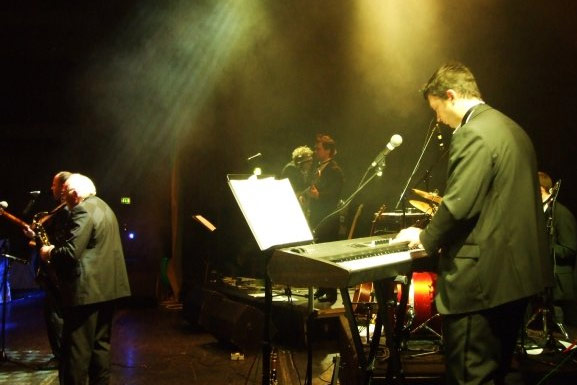
A wedding band has a bigger responsibility than playing songs competently. The band needs to read the guests, create momentum and make it easy for people to join in. That takes repertoire, timing, confidence, humour and the ability to move between generations without making any group feel forgotten.
Talk to your band about the first dance, introductions, important guest requests and the handover to the DJ. A strong beginning and a proper finale make a difference, but so does what happens in between.
The DJ: keep the celebration moving
The DJ should know what the band has already played, what music your guests love and what you do not want to hear. A seamless changeover avoids that awkward period when the floor empties, the lights rise and everyone assumes the party is over. Read more about Harlequin's DJ and live band option.
Think of the final hour as part of the same story, not an unrelated playlist. Plan for venue curfews, transport and a comfortable end to the evening.
The principle is uncomplicated: begin with meaning, move through warmth and conversation, build the excitement, then finish with the kind of celebration people are delighted to have shared.